Utilizing Semantic Connectivity to Develop a Durable Digital Existence
The Shift Towards Fluid Rankings in 2026
Online search engine results pages (SERPs) stopped being static lists long before 2026, but the existing year has seen the overall dissolution of the conventional ranking grid. Today, volatility is not an occasional spike following a core upgrade. It is a constant state of flux driven by real-time design training and predictive intelligence. Websites that once sat comfortably in the leading 3 positions for months now discover their exposure changing by the hour, typically based on the particular intent profile of the individual searching. This environment needs a move far from legacy tracking and toward a more technical understanding of how search engines consume and translate information at scale.
The primary driver of this 2026 volatility is the combination of generative response layers that manufacture information on the fly. These systems do not just fetch links. They create custom-made user interfaces. When a user asks a question, the search engine evaluates countless possible sources, looking for factual accuracy, recentness, and the capability of the source to please a multi-step question. Since these examinations take place in milliseconds utilizing specialized vector databases, the "winner" of a search inquiry can change as quickly as a brand-new piece of information is crawled or a previous source is decreased the value of for lack of context. This constant re-evaluation makes digital visibility in modern markets a matter of technical perseverance rather than just content volume.
Predictive Search Intelligence and User Intent Clusters
Online search engine in 2026 have moved beyond reacting to what a user types. They now anticipate the next 3 questions a user is most likely to ask. This predictive online search engine intelligence uses historical behavior and real-time patterns to pre-render result pieces. If the engine prepares for a shift in user interest, it changes the SERP before the user even completes their session. This produces a high-volatility environment where a page may rank for a particular keyword in the early morning however vanish by afternoon because the engine has actually moved the "intent cluster" for that term toward a different topical focus.
Comprehending these intent clusters is the brand-new standard for performance. Instead of targeting single phrases, technical teams now concentrate on semantic nodes. These nodes represent groups of related concepts that online search engine deal with as a single topical entity. When volatility strikes, it typically affects a whole node. A site may lose visibility because the engine decided that the current user context needs more transactional information rather than informative guides. This is where crawl optimization ends up being vital. If a site can not signify its context rapidly through clear, structured information, it risks being disregarded during these rapid-fire intent shifts. Effective management of Asia Virtual Solutions Performance frequently helps bridge the gap in between technical facilities and search engine analysis.
Handling Crawl Budgets for AI Agents
The method online search engine crawl the web has gone through an enormous change in 2026. Conventional bots that just "check out" HTML are being phased out in favor of AI representatives that "understand" the relationship between data points. These representatives are far more resource-intensive, leading online search engine to be a lot more selective about what they crawl and when. Crawl optimization is no longer almost fixing 404 mistakes. It has to do with minimizing the computational cost for the online search engine. Sites that supply tidy, API-accessible data or extremely enhanced headless architectures are seeing less volatility because they are easier for AI representatives to validate.
When an AI representative comes across a website that is sluggish to render or has an untidy internal link structure, it often assigns a lower top priority to that domain. In a high-volatility market, a delay in crawling can imply a week of lost traffic. Online search engine are focusing on "freshness" and "authority" in a way that requires nearly immediate indexing. If a site releases a crucial update but the spider does not see it for twelve hours, the predictive intelligence designs will continue to serve the old, potentially incorrect details, or even worse, they will favor a rival whose website is easier to ingest. This makes the technical health of a website the structure of its ranking stability.
The Role of Structured Data in Design Training
Structured information has actually ended up being the main language of search in 2026. While human-readable content still matters for conversion, online search engine utilize Schema.org and other markup languages to train their real-time designs. High SERP volatility is frequently a symptom of the online search engine trying to resolve contrasting data in between various sources. If 3 various sites offer 3 various sets of truths about a service in a local area, the engine will change between them till one emerges as the most "relied on" node. This trust is typically developed through consistent, verifiable structured data that matches throughout numerous platforms.
Entities are now more vital than keywords. A search engine in 2026 views a business, a product, or a principle as a special entity with particular qualities. Volatility takes place when the engine is uncertain about the relationship in between these entities. For example, if a business is mentioned in a news post but its own website doesn't show that brand-new information through correct markup, the engine may experience a "confidence drop," causing a temporary slide in the rankings. Preserving a stable existence requires a proactive approach to entity management, making sure that every digital touchpoint reinforces the same accurate data.
Presence Share vs. Conventional Ranking Positions
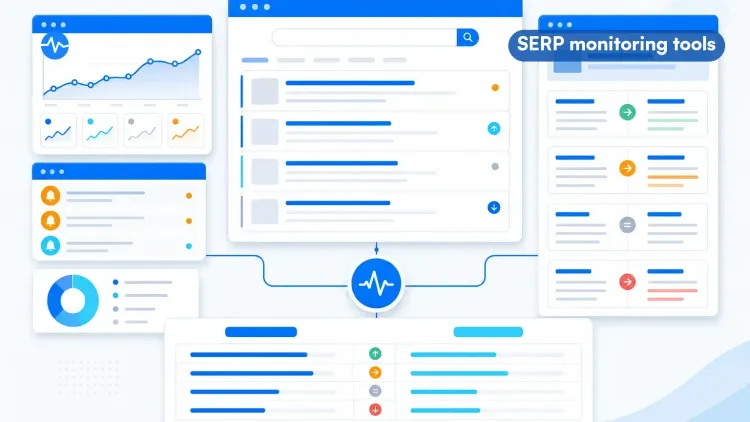
The metrics used to determine success have actually shifted substantially this year. Because the SERP is so unpredictable and tailored, a "number one ranking" is nearly difficult to confirm for everyone. Rather, analysts are taking a look at visibility share. This metric tracks how frequently a brand appears in generative answers, carousel functions, and predictive suggestions across countless simulated user sessions. High volatility may indicate a website moves from position one to position 4, but if it remains the primary source for the AI-generated summary at the top of the page, its actual traffic may increase.
This shift in focus needs a various type of reporting. Teams are now trying to find patterns in the volatility. Does the site drop whenever a particular rival releases a video? Does presence increase when a specific type of structured information is added? By analyzing these patterns, organizations can identify the "trigger occasions" that cause search engines to re-evaluate their material. Utilizing Asia Virtual Solutions Website Performance SEO has actually ended up being a typical way for business to keep track of these fluctuations and respond before they end up being irreversible losses. The objective is no longer to stay static, however to make sure that when the SERP moves, it relocates your favor.
Technical Latency and its Influence On Browse Self-confidence
In the 2026 search environment, speed is not practically user experience. It is about model self-confidence. Browse engines use "latency-adjusted confidence ratings" to choose which results to display in their most prominent positions. If a site takes 500 milliseconds longer to respond than its rival, the online search engine's predictive model may de-prioritize it, not since of the user's persistence, but because the engine requires to gather information for its generative action as quickly as possible. Every millisecond of delay in the crawl or render process presents a threat of volatility.
Edge SEO has ended up being a basic practice to combat this. By moving optimization jobs-- like updating meta tags, injecting structured information, or handling redirects-- to the network edge, sites can react to spiders with lightning speed. This decreases the time it takes for a search engine to "confirm" its prediction about a page's significance. When the engine can validate its information quickly, it is less most likely to switch that result out for another source throughout a high-volatility occasion. Stability in 2026 is typically a byproduct of technical efficiency and the removal of all unnecessary friction in between the server and the search agent.
Adapting to User-Agent Optimization
Optimization for 2026 involves a particular focus on user-agent habits. We are seeing online search engine release various types of crawlers for different functions: some for quick indexing of news, others for deep semantic analysis, and others for confirming transactional information. A one-size-fits-all technique to SEO leads to irregular rankings since the site might please the "news" spider however stop working the "semantic" spider. Identifying which bots are visiting which pages and what they are searching for is a vital part of modern search intelligence.
Log file analysis is more pertinent than ever. By enjoying how these varied spiders connect with a website, technical groups can see precisely where the online search engine is having a hard time. If the semantic spider is spending excessive time on irrelevant pages, that is a clear indication that the website's internal hierarchy is confusing the design. Remedying these concerns can lead to an instant reduction in SERP volatility. A clean, sensible path for each kind of bot makes sure that the search engine has a high-confidence map of the site's worth, which is the best defense against the continuous shifts of the AI period.
The Future of Search Intelligence Beyond 2026
As we look towards the end of 2026 and into 2027, the trend toward predictive search will just speed up. We expect to see search engines move towards "zero-query" user interfaces, where info is provided based on biometric or environmental triggers. In such a world, the idea of a SERP might vanish totally, replaced by a continuous stream of confirmed details. For those handling online platforms, the difficulty will be to remain the most trusted source of fact in a world where the online search engine is the ultimate gatekeeper.
The secret to surviving this shift is a dedication to technical excellence and information stability. Volatility is just a threat to those who count on outdated strategies or low-quality content. For those who understand the mechanics of crawl optimization and predictive intelligence, the existing state of search uses a way to reach users with more precision than ever before. Success in this era does not come from attempting to stop the volatility, but from ending up being the most dependable variable in the online search engine's complex formulas.
The focus needs to remain on supplying structured, high-speed, and semantically abundant data. When online search engine can count on a website to supply the best answer in the quickest amount of time with the least computational effort, they will naturally favor that website in their rankings. This is the truth of search in 2026: a fast-paced, AI-driven environment where the only constant is the requirement for technical precision. By prioritizing the requirements of both the human user and the AI agent, organizations can discover stability even in the most unstable markets.